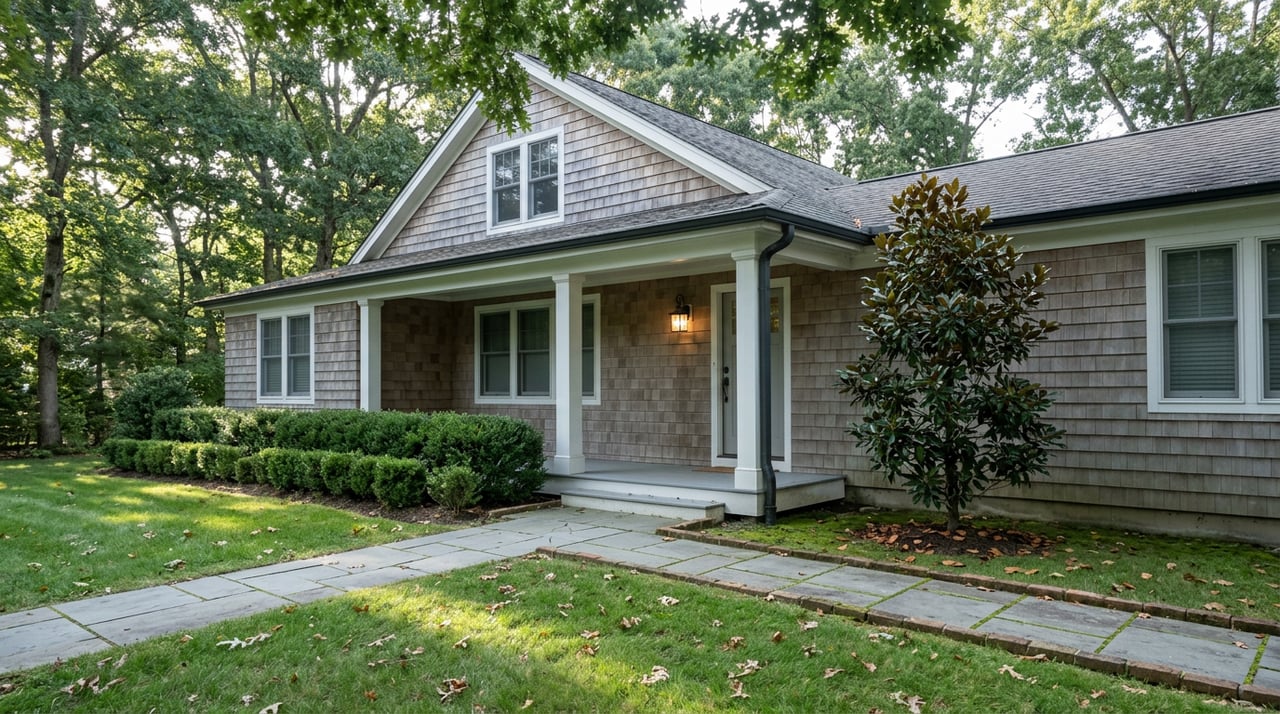
What the Price Gap Between Northfield and the Island Really Buys You
September 17, 2026
September 17, 2026
Pull up a Northfield listing and a Margate listing side by side and the first thing you notice is the zero. A well-kept Northfield home might close in the $440,000s. A Margate home a few miles east, on the same architect's plans in some cases, closes north of a million. The instinct is to read that gap as a beach tax, the price of sand and salt air. That instinct is wrong, or at least incomplete. The bigger driver of that gap is not distance to the water. It is which insurance regime your mortgage falls into the moment you cross onto the island.
That distinction matters more than it sounds like it should, because it is the one piece of the purchase that does not show up on a listing sheet and often does not surface until a lender's underwriter flags it midway through a contract.
Start with what a recent twelve-month window of Northfield sales actually shows. Through the spring of this year, the median sale in Northfield settled around $440,000, with the average closer to $531,000. By this summer, homes listed there were carrying a median asking price near $449,000. That is a tight, coherent picture: Northfield is a sub-$500,000 market on the mainland side of Atlantic County.
Margate tells a messier story, and the mess itself is worth sitting with. By last September, the trailing median sale price for Margate had dropped to $1.2 million, down 18 percent from the year before, with homes sitting on the market for nearly four months on average. A different measure from roughly the same window put the median considerably higher, close to $1.59 million. A third read on late-2025 activity showed a median list price of $1,550,000 against a median sold price of $1,270,000, with homes closing at about 94.9 percent of list.
None of those numbers are wrong. They are measuring different things. A trailing median of closed sales captures whatever mix of homes happened to sell in that window, which can swing wildly month to month in a market with only a couple dozen transactions. A list-versus-sold comparison captures negotiating room. What all three agree on is direction: Margate sellers are giving up more ground to close a deal than they were a year or two ago, and the softest spots are concentrated in specific pockets, with price adjustments showing up repeatedly on streets like Thurlow Avenue, North Delavan Avenue, and South Huntington Avenue, mostly in the upper price tiers.
Ventnor sits in between. Its home value index stood at $644,493 as of the end of June this year, up 8.8 percent over the prior twelve months, a steadier climb than Margate's recent pullback.
So the raw gap between Northfield and the island towns is real, somewhere between two and three times the price for a comparable footprint. The question worth asking is what that multiple is actually paying for.
Northfield sits about seven miles inland, high enough above sea level that water damage there tends to originate inside the house rather than outside it. A supply line behind a washing machine finally gives out. A water heater tucked in a basement closet develops a slow leak that goes unnoticed for weeks. A dishwasher overflows on a Saturday afternoon while the family is at a Mainland Regional game. Those are ordinary homeowner's insurance claims, the kind covered under a standard HO-3 policy with no separate program, no federal backstop, and no waiting period.
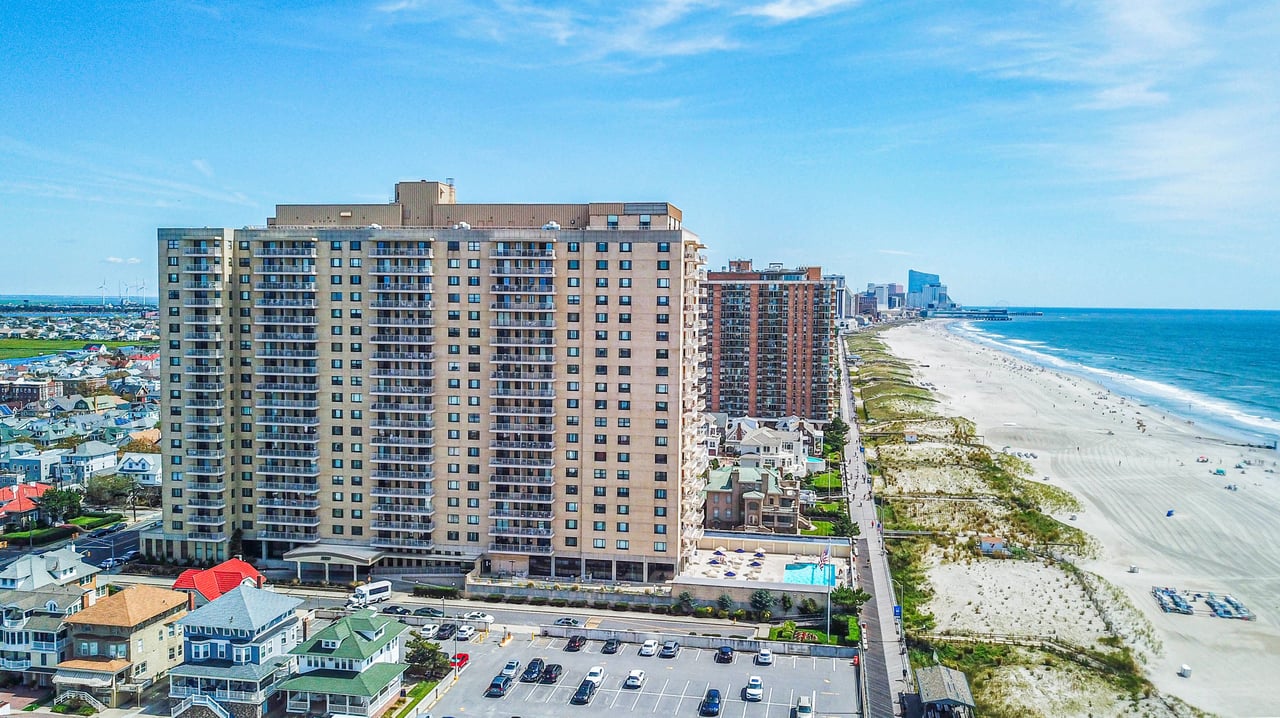
Cross the bridge onto Absecon Island and the calculus changes entirely. Homes in Margate and Ventnor sit in FEMA-designated flood zones, and if your mortgage is federally backed and your home falls in a zone beginning with A or V, flood insurance is not optional. It is a closing condition, enforced the same way title insurance is, and Margate has required it since the earliest years of the National Flood Insurance Program's existence, carrying its own NFIP community identifier on file with FEMA.
That is the mechanism the price gap is quietly pricing in. Not "closer to the beach," but "underwritten by a different set of rules for as long as you own the house."
The statewide average for an NFIP premium in New Jersey is one of those figures that changes depending on which recent report you read, somewhere near $950 a year by one count, closer to $1,200 by another, and pushed toward $2,100 by a newer analysis reflecting FEMA's Risk Rating 2.0 pricing model. That spread alone tells you the average is the wrong number to anchor on. The range is what matters. An inland property in a moderate-risk zone can carry flood coverage for under $400 a year. A coastal property in a high-hazard V or VE zone, which describes a meaningful share of the barrier island, can run past $4,000 and approach $6,000 a year depending on elevation and construction, according to recent statewide flood insurance breakdowns.
That is not a rounding error stacked on top of a mortgage payment. It is a second recurring bill, separate from homeowner's insurance, separate from property tax, and mandatory for the life of a federally backed loan.
There is a partial offset worth knowing if you are the one buying on the island. Assuming a seller's existing NFIP policy at closing, rather than opening a new one, preserves that policy's gradual phase-in toward full-risk pricing under Risk Rating 2.0. A brand-new policy starts at full risk immediately. That single decision, made in the closing package rather than negotiated on price, can be worth real money over several years of ownership.
| Northfield | Ventnor | Margate | |
|---|---|---|---|
| Recent sale range | ~$440,000 median | ~$644,493 average value | $1.2M to $1.59M median (measures vary) |
| Flood insurance status | Not federally mandated for most parcels | Mandatory in Special Flood Hazard Area | Mandatory since NFIP's earliest years |
| Typical annual flood premium | Often under $400 to $1,000 | Can run into the thousands, zone-dependent | Can run $4,000 to $6,000+ in high-hazard zones |
| Defining local corridor | Tilton Road commercial strip and the New Road frontage near Atlantic City Country Club | Absecon Island, surrounded by water on all sides | Barrier island, oceanfront and bayfront blocks |
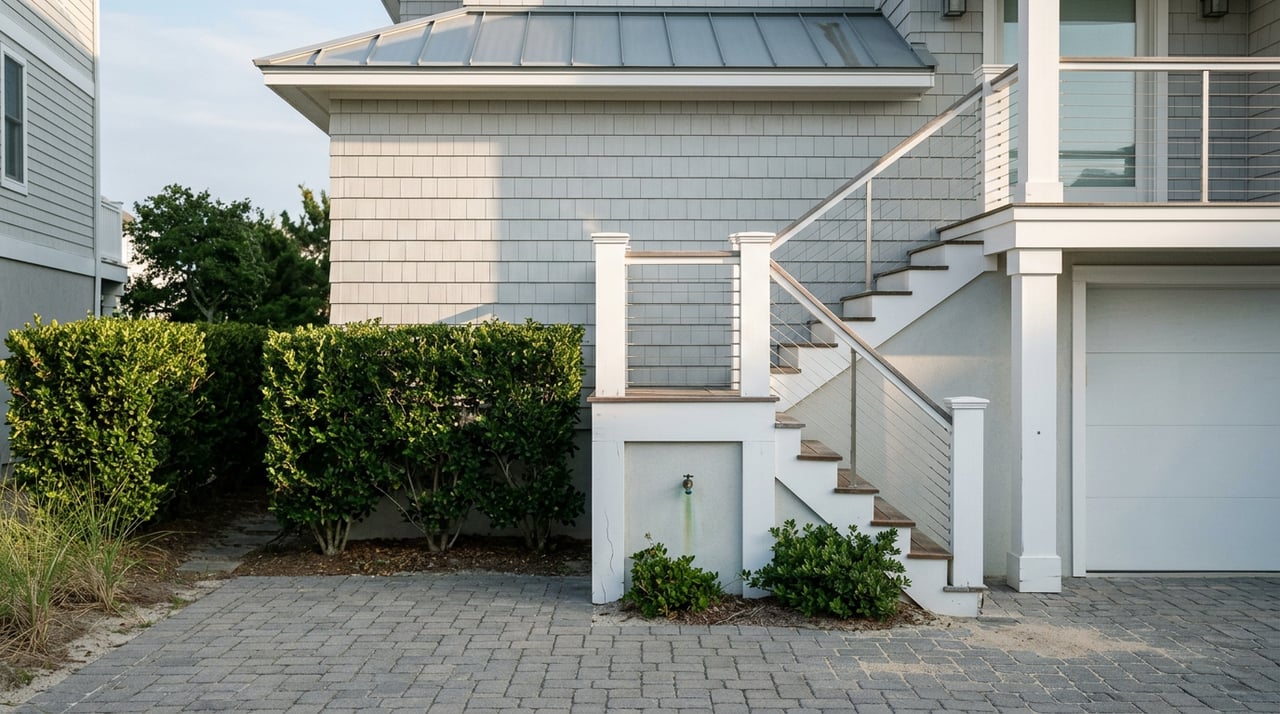
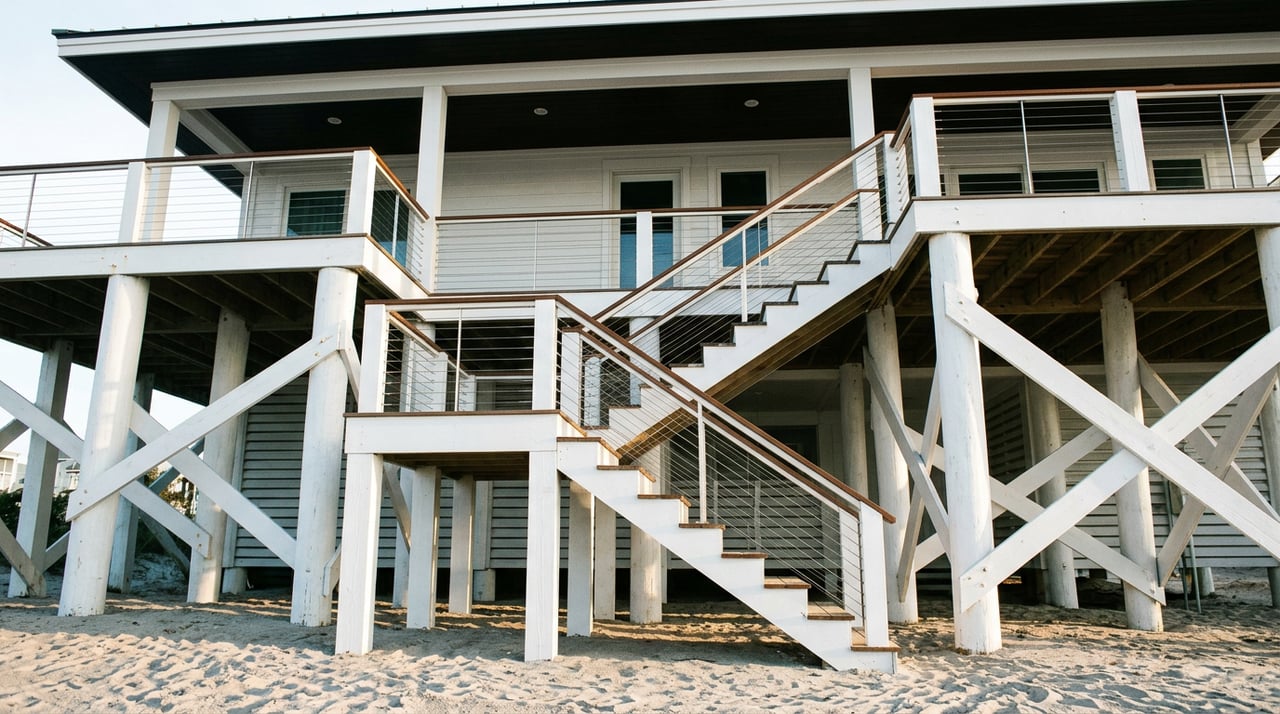
If a purchase on the island involves any plan to rebuild, substantially renovate, or elevate, New Jersey's Department of Environmental Protection adopted new coastal construction standards this year under its Resilient Environments and Landscapes rule. The headline change requires new construction or substantially improved buildings in coastal flood hazard areas to elevate to the design flood elevation plus four additional feet. Projects that had a permit application deemed complete on or before July 20 of this year were grandfathered under the older, less strict standard. Anything filed after that date falls under the new one. For a buyer evaluating a teardown or a major renovation on the island rather than a straightforward resale, that date is not academic. It can change the buildable footprint and the construction budget before a shovel goes in the ground.
None of this makes Northfield a consolation prize for buyers priced out of the island. It has its own identity, built around a different set of daily anchors. The most sought-after stretch of the city runs along New Road and West Mill Road, fronting the Atlantic City Country Club, with the Tilton Road corridor functioning as the city's retail spine, long known locally as the golden mile, anchored by longstanding shops, a movie theater, and everyday services within a short drive of most of the city's residential grid. AtlantiCare and the FAA's William J. Hughes Technical Center sit among the area's larger employers, and Birch Grove Park anchors more than 270 acres of open space on the city's eastern edge. It is a year-round, work-commute kind of place seven miles from the ocean, not a scaled-down version of a beach town.
If a Northfield-versus-island decision is in front of you, the price gap on paper is only half the comparison. Before you weigh a $500,000 Northfield home against a $1.2 million island home, get real numbers on the second bill. Ask for an elevation certificate on any island property before you make an offer. It typically costs a few hundred dollars and it is the single input that most changes a flood premium quote under the current per-property pricing model. Ask whether the seller's existing flood policy can be assumed at closing rather than replaced. And when you build a monthly budget for either house, put the flood premium in the same column as property tax, not the same column as a one-time closing cost. It renews every year for as long as you hold the mortgage.
Do Northfield homes ever require flood insurance? Some do. Flood zone status is assigned parcel by parcel, not city by city, and a small share of Northfield properties near its eastern edge can fall into a mapped flood zone. The city as a whole simply carries far less of that exposure than the barrier island towns.
Can a Northfield buyer skip flood insurance entirely? If a specific parcel sits outside a mapped Special Flood Hazard Area and the buyer is not required by a lender to carry it, yes. It is worth confirming zone status on any specific address rather than assuming based on the city's general reputation.
Whichever side of the bridge you are weighing, the honest comparison starts with real numbers on both bills, not just the one on the listing sheet. If you want a clear read on what a specific property in Northfield, Margate, or Ventnor would actually cost to carry, Daniel Rallo can walk you through it. Get your free home valuation to start.
Monthly Blog
Daniel's mission is simple is to put people before profit, lead with integrity, and help homeowners and investors maximize their potential. Whether you’re buying, selling, investing, or just love real estate, Daniel is your go-to resource for expert advice and authentic insight.

4232 Harbor Beach Blvd Brigantine, NJ 08203