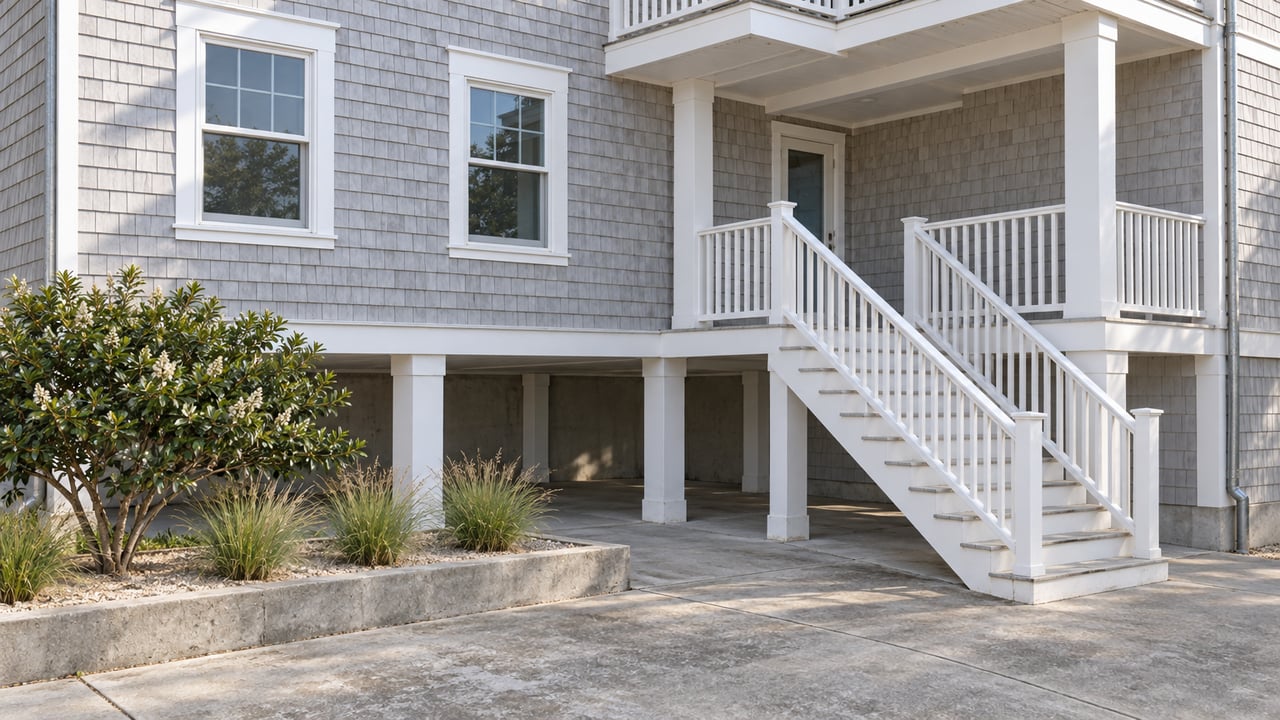
Wonderland Pier Is Gone. Ocean City's Dry-Town Rule Isn't Going Anywhere.
October 1, 2026
October 1, 2026
The lot at Sixth Street and the Boardwalk has been empty since Gillian's Wonderland Pier closed for good on October 13, 2024, and that empty space has generated more speculation than the amusement park ever did in its decades of operation. Nearly 3,000 people signed a petition warning against a "mega development" on the site, the fear being that whatever replaces the Ferris wheel will be large enough to finally bring a liquor license to a town that has never issued one. City Council answered that fear directly, voting 6-0 in September 2024 to reaffirm the alcohol ban specifically to kill the rumor. What's worth understanding, if you're weighing a purchase here, is that the vote wasn't really the thing stopping a wet Ocean City. Three separate legal locks are, and they don't depend on who wins the next council seat.
That redundancy is the actual real estate story. A policy resting on one ordinance can flip with one election cycle. A policy resting on deed language, zoning code, and a state licensing rule all pointing the same direction is a different kind of input, closer to a fixed cost of doing business here than a mood that might change.
The Boardwalk property is now owned by Eustace Mita, developer of the Icona Resorts brand, who took over the real estate in 2021 when Wonderland Pier defaulted on roughly $8 million in mortgage loans. Mita has proposed a hotel of about 252 rooms, with a total project cost reported between $135 million and $155 million, alongside plans to preserve some of the pier's rides, including its landmark Ferris wheel and carousel. The property was appraised at $25 million before the announcement.
None of that is small. A 252-room hotel clears the size threshold, 100 rooms, that New Jersey's Division of Alcoholic Beverage Control uses to allow a municipality to issue an additional liquor license outside its normal population-based cap. On paper, a hotel this size is exactly the kind of building that could carry a license in most New Jersey towns.
Ocean City isn't most towns.
Reporting on the Wonderland site lays out why the hotel-liquor-license math doesn't actually work here, and it isn't a single obstacle:
Councilman Dave Winslow, who sponsored the September 2024 resolution, put it plainly at the meeting:
"First of all, it's never been permitted. I don't ever see it being permitted. I would never vote to have it permitted."
Councilman Keith Hartzell, who had campaigned against a hotel-driven liquor license in the 2022 mayoral race and lost, was back on Council by the time the resolution passed and voted with the rest of the body, 6-0.
Buyers weighing a shore purchase get asked, implicitly or directly, to underwrite the town's character along with the house. In a lot of markets that character is genuinely a variable. A township can loosen a short-term rental ordinance, approve a new liquor license, or rezone a corridor within a single budget cycle, and the rental income or resale story tied to that character shifts with it.
Ocean City has arranged its own version of that variable so it isn't easy to move. The alcohol ban here isn't resting on custom, or on the fact that nobody has gotten around to challenging it. It's resting on three separate legal mechanisms, each of which would need to change on its own before anything downstream could happen. That's the kind of structural stability an underwriting model actually wants, even if the model never says the word "alcohol."
The family-market positioning that the dry-town rule protects shows up directly in how Ocean City's short-term rental market behaves. As of July 2026, the market had roughly 1,300 active short-term rental listings, with the average listing earning about $50,000 in trailing twelve-month revenue at a 54 percent occupancy rate and a $464 average nightly rate, according to short-term rental analytics firm AirDNA. Guests here also book unusually far ahead, averaging around ten weeks of lead time, a pattern more consistent with a planned family week than a spontaneous weekend grab.
That lead time changes the operating playbook. Hosts in Ocean City lean heavily toward Firm or Strict cancellation policies rather than the flexible terms that dominate last-minute, weekend-driven markets, because the booking behavior supports it. Property size matters more than it does in a nightlife-driven rental market too: larger homes see dramatically higher nightly rates than small units, since the demand is a family or extended group renting an entire house for the week, not a couple grabbing a room for a night out. A studio and a six-bedroom house aren't competing for the same guest here the way they might in a market built around bar-hopping tourism.
None of that is an accident of taste. It's what a market looks like when the thing it's selling is a predictable, alcohol-free family week, and the legal structure behind that promise is hard to unwind.
A few miles south, Margate runs on a different mechanism. Market reporting earlier this year pointed to the town's concentration of nightlife and high-end dining as a factor supporting both price premiums and investor confidence, particularly for teardown candidates and properties under $1.5 million. Somers Point, on the mainland side of the bridge, has built its own summer identity around beach concerts and a restaurant and bar scene that doesn't share Ocean City's restrictions.
None of this makes one town better positioned than another. It means the underwriting logic is different. A Margate buyer is pricing in foot traffic tied to restaurants and bars, shorter booking windows, and a guest base drawn partly by the nightlife itself. An Ocean City buyer is pricing in a rule that's been reaffirmed by public vote, reinforced by zoning, and backed by private deed restrictions on top of both, protecting a family-vacation demand curve that books early and stays the whole week.
Comparing the two towns on price per square foot alone misses the point. The real comparison is which demand mechanism you're buying into, and how durable that mechanism actually is against the next council meeting or the next zoning application.
Does the dry-town rule apply inside a rental home, or just to restaurants and stores? The ban covers the sale and public consumption of alcohol, not private possession. Adults over 21 can legally have and drink alcohol inside a private home or a rental home in Ocean City. What you won't find anywhere on the island is a restaurant, bar, or liquor store selling it, and BYOB at restaurants is also prohibited, unlike some other dry towns that allow it.
Could the Icona hotel proposal still change the alcohol picture down the road? Based on the most recent public reporting, no path currently exists without two separate reversals: a Council vote to grant the liquor license exception, which every sitting member has said won't happen, and a rezoning of the Boardwalk corridor between Sixth and 14th Streets to permit hotel use in the first place. Neither is on the table as of this writing.
Comparing a purchase in Ocean City against a wetter downbeach town involves more than a spreadsheet of nightly rates. If you're trying to figure out which market mechanism actually fits what you want to own, Daniel Rallo can walk through the comparison with you, starting with a free home valuation for the property you already have your eye on.
Daniel's mission is simple is to put people before profit, lead with integrity, and help homeowners and investors maximize their potential. Whether you’re buying, selling, investing, or just love real estate, Daniel is your go-to resource for expert advice and authentic insight.

4232 Harbor Beach Blvd Brigantine, NJ 08203